

The Kedarnath trek is one of the main concerns for pilgrims planning the Kedarnath Yatra, especially those wondering whether the journey will be physically difficult. One of the first questions people ask when planning the Kedarnath Yatra is: “Is the Kedarnath trek very difficult?”. The most accurate answer is: it depends on the individual.
The Gaurikund–Kedarnath route is approximately 16 km and is officially described by Uttarakhand Tourism as a medium-to-steep trek. For a regular walker, certain sections of the Kedarnath trek may feel manageable. For someone who rarely walks long distances, however, it can feel considerably more demanding. Age alone does not determine how someone will manage the journey. Fitness, health, walking habits, pace, weather and altitude all play an important role.
Why Is the Kedarnath Trek Difficult?
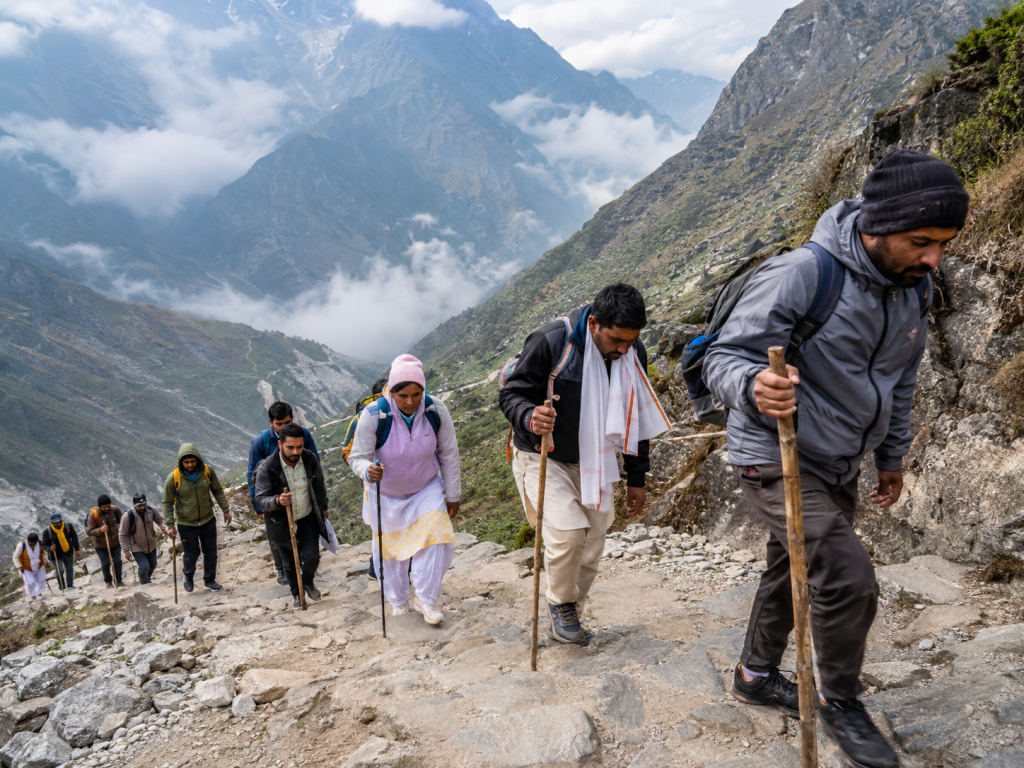
There are three main reasons. First, you are walking uphill for a considerable distance. Second, you are gaining significant altitude. Kedarnath is situated at approximately 3,584 metres above sea level, so walking there can feel very different from walking at lower elevations. Third, Himalayan weather and changing trail conditions can add another challenge. Walking 5 km through your neighbourhood and walking 5 km uphill in the Himalayas are completely different experiences. That is why preparation for the Kedarnath Yatra matters.
Can Someone With Average Fitness Do the Kedarnath Trek?
Many ordinary pilgrims undertake the Kedarnath Yatra every season. You do not have to be an experienced mountain trekker. However, it is unwise to go from almost no physical activity to expecting your body to comfortably manage several hours of uphill movement. In the weeks before your trip, start regular walking and gradually increase the distance. If practical, include some gentle slopes or stairs in your routine. The aim is not athletic performance. It is simply to get your legs and body accustomed to sustained movement.
Don’t Let Other People Set Your Pace
This may be one of the most useful tips for the entire Kedarnath trek. When walking in a group, some people will naturally be faster. Let them be faster. Trying to match someone else’s pace can lead to unnecessary fatigue. A steady pace that you can comfortably maintain is usually much better than repeatedly walking fast and stopping because you are exhausted. Remember, reaching Kedarnath is not a race.
Take Breaks During the Kedarnath Trek
Resting is not failing. Short pauses give you an opportunity to recover, adjust your clothing and take in your surroundings. One of the pleasures of walking towards Kedarnath is the extraordinary Himalayan scenery along the route. There is no reason to rush past all of it. Walk steadily, rest when necessary and continue when you are comfortable.
Assistance Is Available for the Kedarnath Yatra
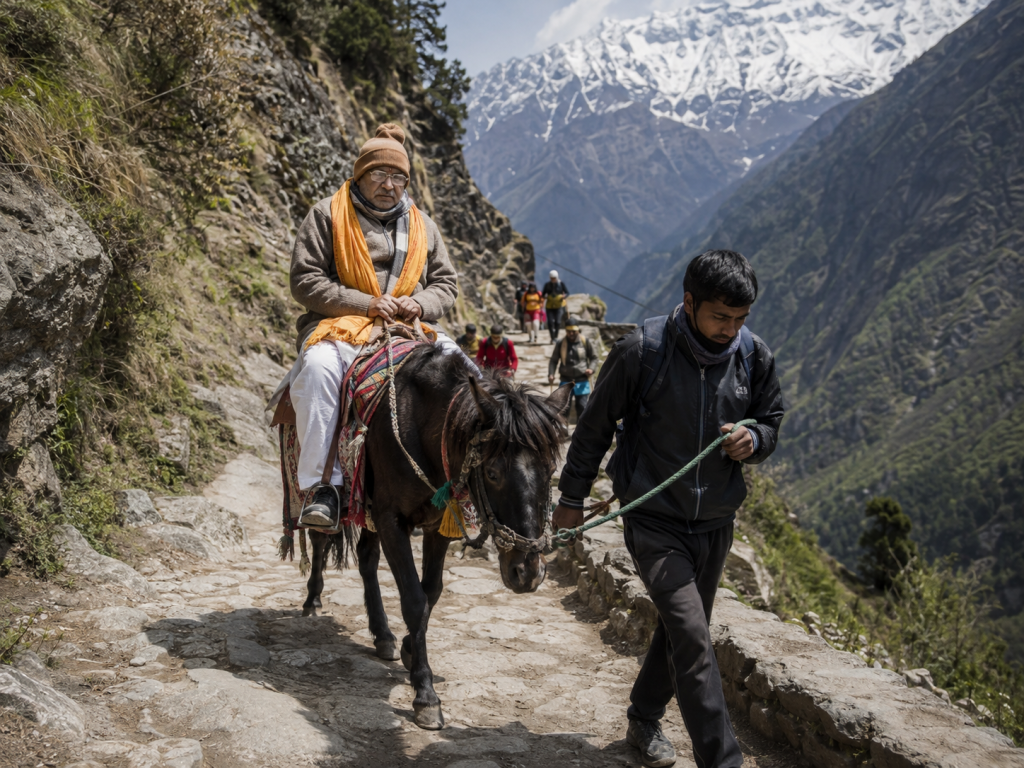
Pilgrims who do not wish to walk the entire route may generally use assisted travel options such as ponies and palki or doli services during the yatra season. There is no shame in using assistance if you need it. The purpose of a pilgrimage is devotion — not proving physical endurance. Some pilgrims may walk part of the journey and choose assistance when necessary, while others may decide from the beginning that an assisted option is more suitable for them.
What About Older Pilgrims?
Senior travellers should consider their individual health, fitness and mobility rather than simply their age. Some people in their seventies remain very active, while someone considerably younger may find prolonged uphill walking difficult. Anyone with existing health concerns should seek appropriate medical advice before travelling to high altitude. An organised itinerary with sensible pacing, suitable overnight stops and assistance when required can also make an important difference.
The Mental Challenge of the Kedarnath Trek
Interestingly, Kedarnath is not only a physical journey. Several hours into the trek, the mind may begin asking “How much further?”, “Why is that hill still going up?”, “Are we nearly there?”. This is where attitude matters. Instead of constantly thinking about the remaining distance, break the journey into smaller sections. Walk. Rest. Continue. Take the journey one section at a time. Eventually, the mountains begin to open and Kedarnath comes closer.
Is the Kedarnath Trek Worth the Effort?
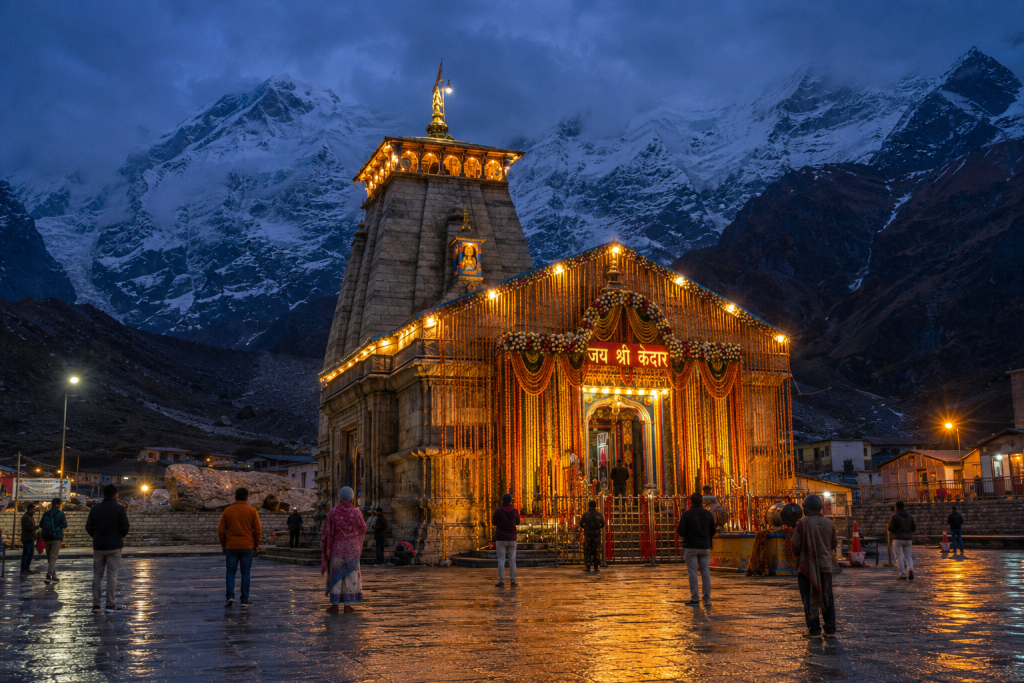
Ask a pilgrim who has just reached Kedarnath Temple. You will rarely hear them talking first about how many kilometres they walked. They talk about seeing the temple. About the mountains surrounding it. About hearing “Har Har Mahadev.” About finally standing before Kedarnath Ji after the long journey through the Himalayas. The Kedarnath Yatra demands effort, but that effort is also part of what gives the pilgrimage its meaning. The Kedarnath trek is challenging enough to deserve proper preparation — but it should not be approached with fear. Prepare properly, respect your body’s limits, walk at your own pace, use assistance when necessary and allow the journey to unfold at its own rhythm.
Har Har Mahadev.
You May Also Like
- Gaurikund to Kedarnath Trek: Step-by-Step Guide
- Kedarnath Yatra for First-Time Pilgrims: A Complete Guide
- Kedarnath Yatra for Seniors: What Older Pilgrims Should Know
- Kedarnath Yatra Packing Guide: What to Carry
Planning your Kedarnath–Badrinath Yatra from Malaysia? Hamsa-Vahini Travel & Tours has been connecting travellers with India for over three decades. Speak to us about upcoming pilgrimage departures.
