

Discover the fascinating history, Mahabharata legends, spiritual significance and timeless beauty of one of Manali’s most treasured temples.
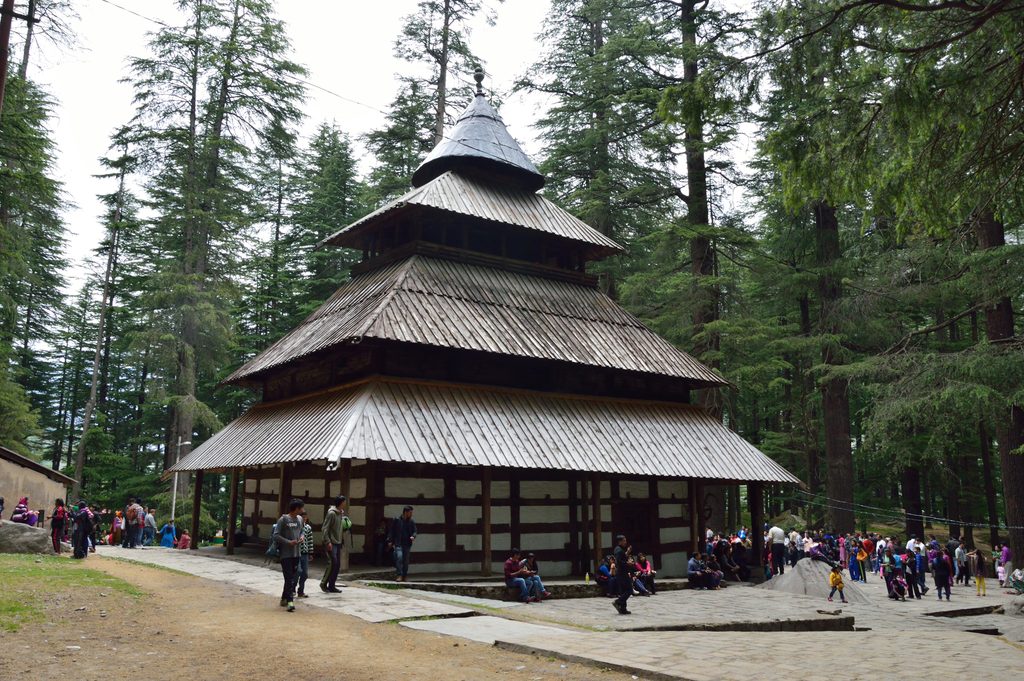
Photo: Kaushik Prabhu / Wikimedia Commons / CC BY-SA 4.0. Source: https://commons.wikimedia.org/wiki/File:Hadimba_Devi_temple,_Manali.jpg | Licence: https://creativecommons.org/licenses/by-sa/4.0/ | Unmodified photograph.
Hadimba Devi Temple Manali stands among the most fascinating historical and spiritual landmarks in Himachal Pradesh. Towering deodar cedar trees surround this centuries-old shrine dedicated to Goddess Hadimba, the wife of Bhima from the Mahabharata. Its remarkable history, ancient legends and distinctive Himalayan architecture make it one of Manali’s most treasured attractions.
Who Was Goddess Hadimba?
According to the Mahabharata, Hadimba, also known as Hidimbi, was the sister of Hidimb, a powerful Rakshasa who lived in the forest. During their exile, the five Pandava brothers — Yudhishthira, Bhima, Arjuna, Nakula and Sahadeva — travelled through the forest with their mother, Kunti. One night, while the others rested, Bhima remained awake to protect his family. Hidimb sensed the presence of humans and instructed his sister Hadimba to approach them. However, when Hadimba encountered Bhima, his courage and strength captivated her. Instead of carrying out her brother’s instructions, she warned Bhima of the danger and expressed her affection for him. When Hidimb discovered what had happened, he became furious and confronted Bhima. A fierce battle followed, and Bhima defeated and killed Hidimb. Hadimba subsequently married Bhima with the consent of his family. Their union would produce one of the Mahabharata’s most extraordinary warriors.
The Birth of Ghatotkacha: Hadimba and Bhima’s Son
Hadimba and Bhima had a son named Ghatotkacha. He inherited extraordinary strength and supernatural abilities from his Rakshasa ancestry, along with the courage of his father. Although Bhima eventually continued his journey with the Pandavas, Hadimba remained in the forest to raise their son. Ghatotkacha later became an important ally of the Pandavas during the Kurukshetra War. He fought valiantly against the Kaurava army, using his remarkable powers to protect the Pandavas. During the great battle, Karna killed Ghatotkacha using a powerful divine weapon that Lord Indra had granted him. Ghatotkacha’s sacrifice played a crucial role in the Mahabharata. By forcing Karna to use this weapon, he prevented Karna from using it later against Arjuna. Thus, Hadimba’s story connects not only with Bhima but also with the larger destiny of the Pandavas.
How Did Hadimba Become a Goddess?
This is perhaps the most fascinating aspect of Hadimba Devi’s story. Although the Mahabharata introduces Hadimba as a Rakshasi, local Himalayan traditions honour her as a powerful and compassionate goddess. According to regional beliefs, after Bhima departed and Ghatotkacha grew older, Hadimba withdrew into the forest to undertake deep meditation and spiritual penance. Local tradition tells us that she meditated on a sacred rock in the Dhungri forest, dedicating herself to a life of spiritual discipline. Devotees believe her devotion and penance brought her divine blessings, eventually elevating her to the status of a goddess. Today, the people of Manali and the Kullu Valley worship her as Hadimba Mata, a protective mother goddess who watches over their land and communities. Her transformation from a forest-dwelling figure in the Mahabharata into a revered deity beautifully illustrates how ancient Indian epics and local Himalayan beliefs have become intertwined over the centuries. For the people of this region, Hadimba Devi represents far more than a character from mythology. She remains their beloved guardian deity.
Hadimba Devi Temple Manali: History and Origins
While the story of Goddess Hadimba belongs to the ancient world of the Mahabharata, the present temple dates back to the 16th century. Historical accounts date the construction of Hadimba Devi Temple Manali to 1553 CE, during the reign of Maharaja Bahadur Singh of Kullu. According to local tradition, a fire destroyed an earlier shrine at this location. The people subsequently rebuilt the temple on the same sacred site. But why did they choose this particular location? Local beliefs identify this as the place where Goddess Hadimba performed her meditation and spiritual penance. The temple stands over a large natural rock associated with the goddess. Devotees also revere footprints that tradition attributes to Hadimba Devi. Unlike many Hindu temples, where worship centres around a sculpted stone or metal idol, the natural rock forms the spiritual heart of this shrine. This distinctive form of worship reflects ancient Himalayan traditions that connect divine presence with natural features such as rocks, caves, forests, mountains and springs. Today, Hadimba Devi Temple Manali stands as a remarkable symbol of faith, mythology, nature and centuries-old local traditions.
A Remarkable Example of Himalayan Architecture
One of the most striking features of Hadimba Devi Temple Manali is its distinctive architecture, which beautifully reflects the traditional craftsmanship of the Himalayan region. Unlike the towering stone gopurams commonly seen in South Indian temples, this historic shrine features a unique pagoda-style structure. Its design blends naturally with the surrounding deodar cedar forest, creating an atmosphere of peace and spirituality.
The temple’s remarkable architectural features include:
- Four-tiered pagoda roof: The temple’s multi-tiered roof features timber-covered sections and a distinctive conical upper roof, giving the shrine its unmistakable Himalayan appearance.
- Traditional stone foundation: A sturdy stone base supports the wooden structure, reflecting construction methods that local craftsmen developed for the mountainous environment.
- Intricate wooden carvings: Beautifully carved doorways display Hindu deities, animals, dancers and traditional decorative motifs, showcasing the artistic heritage of the Kullu Valley.
- Sacred inner chamber: At the heart of the temple lies a natural rock associated with Goddess Hadimba. Devotees regard this sacred feature as an important part of the shrine’s spiritual significance.
- Majestic forest surroundings: Towering deodar cedar trees surround the temple, creating a serene environment where nature and religious tradition exist in harmony.
The temple’s wooden carvings also reflect wider Hindu religious traditions, including artistic representations associated with Goddess Durga. These details demonstrate how local Himalayan craftsmanship and Hindu spiritual beliefs have influenced the temple’s design. More than four centuries after its construction, Hadimba Devi Temple Manali continues to stand as a remarkable example of traditional Himalayan architecture. Its enduring beauty lies not only in its craftsmanship but also in the harmonious relationship between the sacred shrine, its ancient traditions and the natural landscape surrounding it.epresentations associated with Goddess Durga. The combination of wooden craftsmanship, spiritual symbolism and natural surroundings makes Hadimba Devi Temple one of the most distinctive religious monuments in Himachal Pradesh.
Why Is Hadimba Devi So Important to the People of Kullu?
Hadimba Devi holds a special place in the religious and cultural life of the Kullu Valley. Local communities revere her as a protective mother goddess and seek her blessings for their families, villages and well-being. Tradition also connects Goddess Hadimba with the early royal history of Kullu. According to local beliefs, Hadimba Devi blessed the founding ruler of the Kullu royal lineage. This sacred association earned her the affectionate title of “Grandmother of the Kullu Royal Family.” Her importance becomes especially visible during the famous Kullu Dussehra celebrations. Unlike many other parts of India, where Dussehra celebrations centre on the burning of Ravana’s effigy, Kullu celebrates this festival by bringing together numerous local deities in a magnificent religious gathering. Hadimba Devi holds an honoured position in these festivities. Her ceremonial arrival from Manali forms an important part of the traditional celebrations. The people of Manali also honour Goddess Hadimba during local religious festivals, including the annual Dhungri Mela, when devotees gather for prayers, rituals and cultural performances. These enduring traditions demonstrate that worship of Hadimba Devi goes far beyond remembering an ancient legend. She remains a living symbol of faith, protection and cultural identity for the people of the Kullu Valley.
The Sacred Deodar Forest
The magnificent Dhungri forest surrounds Hadimba Devi Temple, creating one of Manali’s most peaceful and spiritually significant settings. Towering deodar cedar trees rise above the shrine, providing shade and a sense of tranquillity. As visitors walk along the forest paths towards the temple, they gradually leave behind the noise of Manali’s busy streets. The gentle rustling of leaves, cool mountain air and quiet surroundings create a calming atmosphere. The deodar tree holds special cultural and religious significance in the Himalayan region. For centuries, local communities have protected sacred groves around temples, recognising their importance to both spiritual traditions and the natural environment. This close relationship between nature and spirituality remains one of the most beautiful aspects of Himalayan religious life. At Hadimba Devi Temple, the forest is more than just a scenic backdrop. It forms an essential part of the sacred landscape.
Ghatotkacha Shrine Near Hadimba Devi Temple
A short distance from Hadimba Devi Temple, visitors can discover a small shrine dedicated to Ghatotkacha, the son of Bhima and Goddess Hadimba. Unlike elaborate temple structures, this shrine centres around a sacred tree where devotees offer prayers and pay their respects. The shrine honours Ghatotkacha’s courage, extraordinary strength and sacrifice during the great Kurukshetra War described in the Mahabharata. It also reminds visitors of the deep connection between Goddess Hadimba, her heroic son and the ancient epic. For travellers familiar with the Mahabharata, visiting both sacred sites offers a meaningful experience. These places bring ancient stories to life and reveal how Hindu mythology continues to shape the spiritual traditions of Himachal Pradesh.
Visiting Hadimba Devi Temple During Winter
Winter transforms Manali into a breathtaking Himalayan destination, with crisp mountain air, misty forests and the possibility of beautiful snowfall. Visiting Hadimba Devi Temple Manali during winter offers a memorable experience. Towering deodar cedar trees surround the historic shrine, while the distinctive wooden architecture adds to its timeless charm. Between December and February, temperatures can fall significantly. Snow occasionally blankets the temple grounds and surrounding forest, creating a picturesque winter landscape. The contrast between dark timber, towering cedar trees and fresh white snow gives the temple an almost storybook appearance. However, snowfall depends on weather conditions and cannot be guaranteed. Visitors should wear warm jackets, gloves, comfortable winter footwear and appropriate layers. During icy or snowy conditions, the forest paths may become slippery, so elderly travellers and those with mobility difficulties should take extra care. Whatever the weather, Hadimba Devi Temple offers visitors an opportunity to discover a quieter side of Manali — one rich in history, spirituality and natural beauty.
Useful Information for Visitors
Location: Dhungri, Manali, Kullu District, Himachal Pradesh, India.
Temple name: Hadimba Devi Temple, also known as Hidimba Devi Temple or Dhungri Temple.
Main deity: Goddess Hadimba, wife of Bhima and mother of Ghatotkacha.
Historical construction: The present temple dates to 1553 CE, during the reign of Maharaja Bahadur Singh of Kullu.
Visiting hours: Generally 8.00 am to 6.00 pm, subject to local arrangements.
Entry fee: Generally free.
Recommended visit duration: Allow approximately 45–60 minutes to offer prayers, admire the traditional architecture and enjoy the surrounding cedar forest.
Travel tips: Wear comfortable footwear, dress respectfully and follow the temple’s instructions regarding photography and religious customs. During winter, take extra care on potentially icy or slippery pathways.
Discover the Spiritual Heritage of Manali
Hadimba Devi Temple is more than just a beautiful landmark. It is a place where mythology, history, faith and nature come together, offering visitors a glimpse into the rich cultural heritage of Himachal Pradesh. From the fascinating story of Goddess Hadimba and her connection to the Mahabharata to the centuries-old traditions preserved by the local communities, every corner of this sacred temple has a story to tell. A visit to Manali would be incomplete without experiencing the peaceful surroundings and timeless charm of this remarkable Himalayan shrine.
Discover Manali and the beauty of Himachal Pradesh with Hamsa-Vahini Travel & Tours.
Interested in exploring this enchanting destination? Contact us through WhatsApp to learn more about our upcoming journeys.
Discover the Himalayas with Hamsa-Vahini — where every journey has a story.

