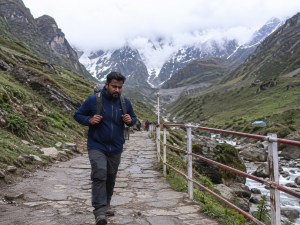

A Kedarnath Yatra for first-time pilgrims can bring two very different emotions at the same time: excitement and uncertainty. You may have seen photographs of Kedarnath Temple surrounded by magnificent Himalayan mountains. You may have watched videos of pilgrims walking along the route while chanting “Har Har Mahadev.” But when it is finally your turn to make the journey, the questions begin. Can I manage the trek? How cold will it be? What should I carry? What happens at Gaurikund? Where will I stay? Will the journey be difficult? These are natural questions for anyone visiting Kedarnath for the first time. Good preparation can help you approach the journey with greater confidence and allow you to focus on what truly matters — experiencing one of Lord Shiva’s most sacred Himalayan shrines.
If you are still learning about the pilgrimage, you may also want to read our Kedarnath Yatra Guide: Everything You Need to Know Before You Go before beginning your preparations.
What First-Time Pilgrims Should Know About Kedarnath
A Kedarnath Yatra should not be approached in quite the same way as an ordinary sightseeing holiday. You are travelling into a remote Himalayan region where weather, mountain roads, local conditions and crowds can influence the programme. Schedules may occasionally need to be adjusted. Comfort levels may not always be the same as those you are accustomed to in larger cities. There may be waiting. There will be walking. Things may sometimes move more slowly than expected. Understanding this before departure can make the actual journey much easier. The experience becomes far more enjoyable when you arrive prepared to adapt to the mountains rather than expecting everything to operate according to a fixed city schedule.
Kedarnath Yatra for First-Time Pilgrims: What to Expect
Many first-time visitors focus almost entirely on the Kedarnath trek itself. However, the yatra begins much earlier. Travellers generally enter Uttarakhand and travel through important pilgrimage towns such as Haridwar or Rishikesh before continuing deeper into the Himalayan region. As the journey progresses, the scenery gradually changes. Wide highways give way to winding mountain roads. Rivers flow alongside the route. Towns become smaller. Valleys become deeper. The Himalayan landscape begins to dominate the journey. Eventually, pilgrims reach the region around Guptkashi and Sonprayag before continuing towards Gaurikund. For many travellers, this gradual transition from the plains into the mountains is itself an unforgettable part of the Kedarnath Yatra.
Sonprayag and Gaurikund: Know the Difference
First-time pilgrims sometimes confuse Sonprayag with Gaurikund. They are two different places and both play an important role in the journey to Kedarnath. Sonprayag is an important transit point on the route. From this area, pilgrims continue towards Gaurikund, which is the traditional starting point of the trek to Kedarnath. During the yatra season, local traffic arrangements, shuttle services and crowd-control procedures may apply between Sonprayag and Gaurikund. These arrangements can change according to local conditions, so it is always best to follow the instructions of the authorities and your tour operator on the day of travel.
Gaurikund: Where the Kedarnath Trek Begins
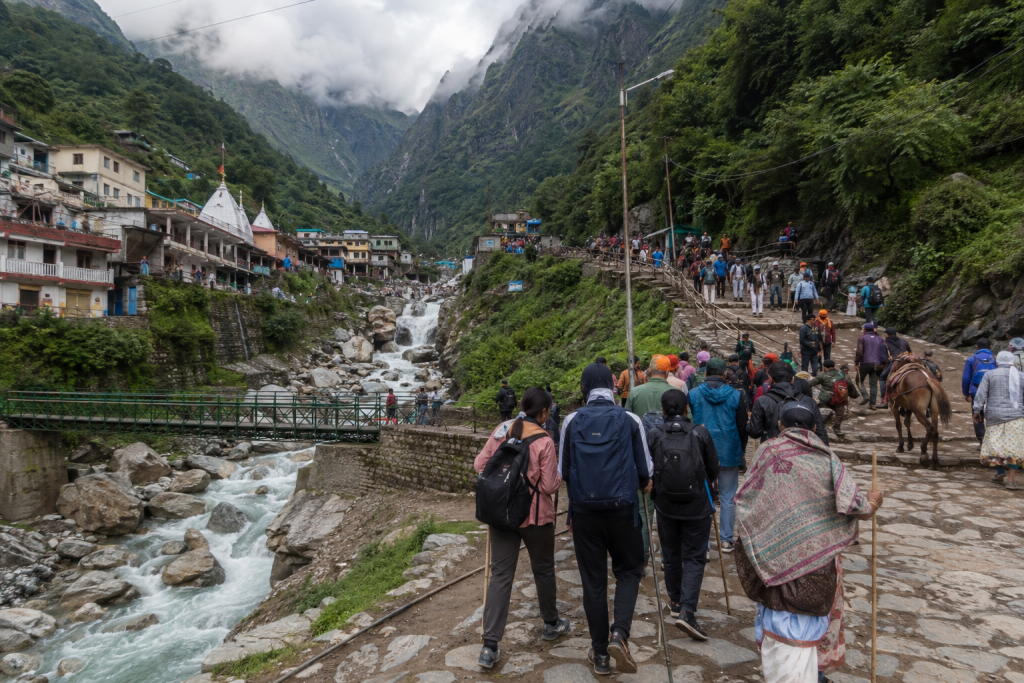
Gaurikund is the traditional starting point for the journey on foot towards Kedarnath. According to the official Uttarakhand Tourism portal, the Kedarnath trek from Gaurikund to Kedarnath Temple is approximately 16 km. For a Kedarnath Yatra for first-time pilgrims, understanding what to expect from the trek can make the journey feel much more manageable. However, do not think of it as simply “walking 16 kilometres.” This is an uphill Himalayan route. The altitude increases as you progress, and the journey can take several hours depending on your walking pace, fitness level, weather conditions and the number of people on the route. Walk at a pace that you can maintain comfortably. Taking short rests along the way is perfectly normal. Do not feel that you have to keep up with faster members of your group. Trying to walk faster than your natural pace can tire you unnecessarily. Your goal is to reach Kedarnath safely and comfortably — not to win a race.
Start the Kedarnath Trek Early
The Kedarnath trek usually begins early in the day for good reason. Starting early gives pilgrims more time to complete the journey at a comfortable pace and allows some flexibility for rest stops, crowds and changing mountain conditions. Access to the trekking route may also be subject to designated timings and local regulations associated with the Kedarnath Wildlife Sanctuary. These timings and operational arrangements can change. For this reason, follow the instructions given by local authorities, your tour guide or tour leader on the day of your journey rather than relying entirely on schedules found online.
What to Pack for a Kedarnath Yatra for First-Time Pilgrims
One lesson many first-time pilgrims learn very quickly is that even a small amount of unnecessary luggage can begin to feel heavy after several hours of walking. Carry only what you genuinely need for the journey. Your backpack should contain easily accessible essentials such as your jacket, rain protection, personal medicines, identification documents, small snacks and other immediate necessities. Avoid carrying items simply because you think you “might” need them. Every additional item adds weight. Your large suitcase should remain at the hotel or designated luggage location — not travel with you along the Kedarnath trail. A light backpack can make a considerable difference to your comfort during the trek.
Dress in Layers
Weather conditions in the Himalayas can change quickly. You may begin your journey feeling comfortable and later find yourself needing warmer clothing. This is why dressing in layers is practical. A simple combination may include a comfortable base layer, a warmer layer and an outer jacket. Keep rain protection easily accessible as well. Instead of wearing one extremely heavy item, layers allow you to add or remove clothing depending on the temperature and conditions. Good footwear is equally important. Choose shoes that provide a comfortable fit and suitable grip. If you are buying new shoes for the pilgrimage, wear them several times before departure. The Kedarnath trek is not the ideal place to discover that your brand-new shoes are uncomfortable.
Eat Sensibly During the Trek
The purpose of eating during the trek is to maintain your energy rather than to have a heavy meal. Simple foods and small snacks are often easier when you are walking for several hours. Dry fruits, nuts, biscuits or other light snacks can be useful to carry. Food stalls are also available at various points along the route during the yatra season, although availability can vary. Sip water regularly according to your needs and take short breaks along the way. Avoid rushing simply because you feel you have stopped for too long. A few minutes of rest can help you continue more comfortably.
Kedarnath Trek Options for First-Time Pilgrims
There is no shame whatsoever in using assistance. A pilgrimage does not become more meaningful simply because somebody walked every kilometre. Ponies and palki or doli services are commonly available along the Kedarnath route and can be important alternatives for pilgrims who may find the entire trek difficult. The suitability of each option can depend on individual mobility, comfort and local conditions. Availability, routes, procedures and rates can also change from season to season, so arrangements should always be verified locally. The objective is not to prove how much physical hardship you can tolerate. The objective is to reach Kedarnath safely and experience the pilgrimage.
Your First Sight of Kedarnath Temple
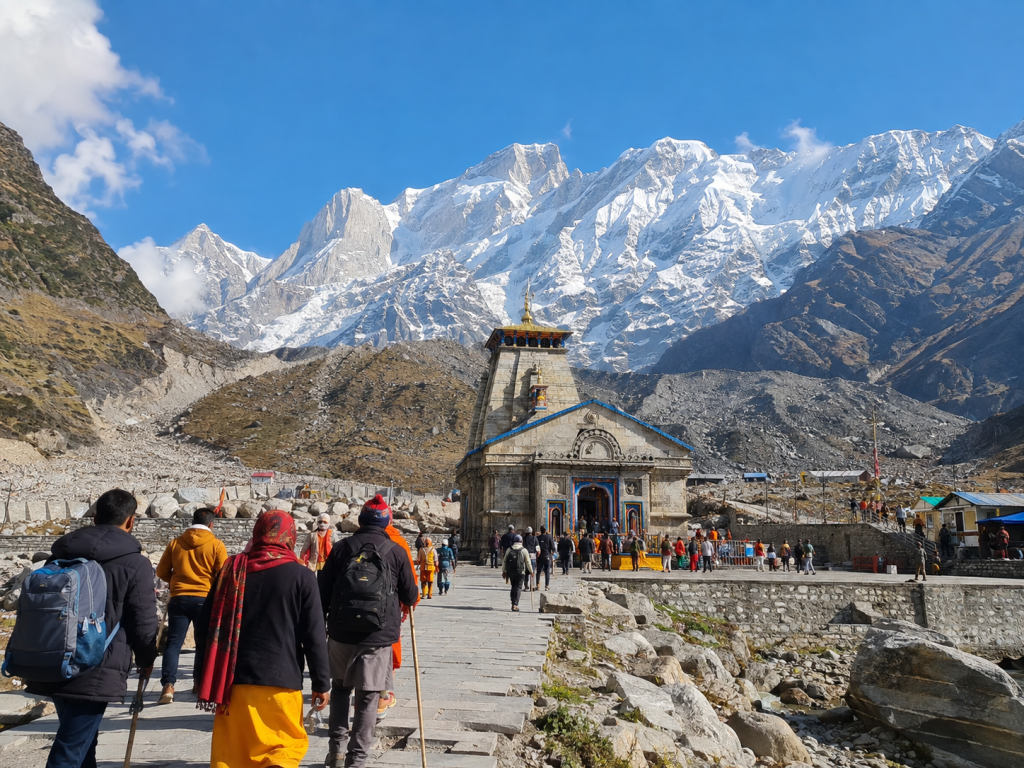
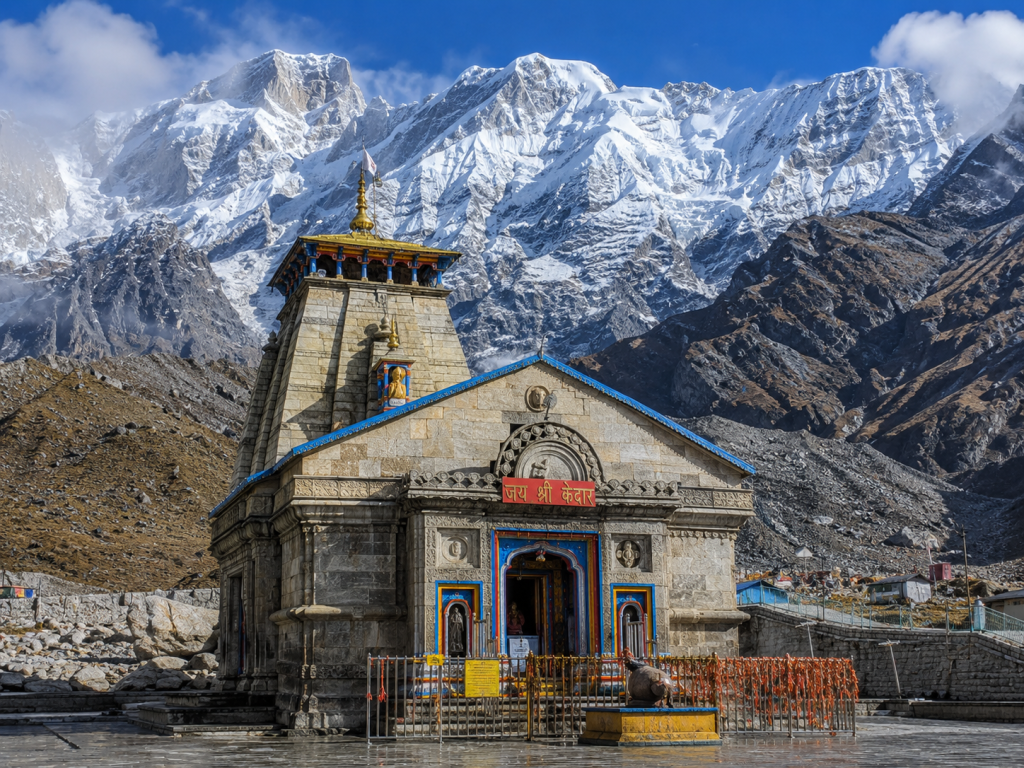
This is the part that no guide can fully prepare you for. After spending hours travelling through the mountains and making your way along the route, you finally begin approaching Kedarnath. The surrounding Himalayan peaks rise dramatically around the settlement. Then the temple comes into view. For someone who has only seen Kedarnath in photographs or videos, the scale of the landscape can be surprising. The ancient stone temple appears almost small when compared with the enormous mountains behind it. Yet somehow, it commands the entire scene. There is no need for elaborate decoration. The surroundings themselves create the atmosphere. At that moment, you may begin to understand why generations of pilgrims have made such an extraordinary effort to reach this remote Himalayan shrine.
Allow Yourself to Experience Kedarnath
When you finally arrive at Kedarnath, resist the temptation to spend every minute taking photographs. Take photographs, of course. But also put your phone away for a while. Stand quietly. Listen to the temple bells. Look at the mountains. Observe pilgrims arriving after completing their long journey. Attend darshan. Allow yourself to absorb where you are. If your itinerary includes an overnight stay at Kedarnath, step outside again when the surroundings are quieter. The atmosphere around the temple can feel very different at different times of the day. Morning, afternoon and evening each reveal another side of Kedarnath. Sometimes the most memorable moments of a pilgrimage are not planned at all. They happen when you simply stop and look around.
The Descent Is Part of the Journey Too
First-time pilgrims sometimes focus so much on reaching Kedarnath that they forget one important detail. You still have to return. The descent should be treated with the same care as the journey upwards. Walking downhill uses different muscles and can become tiring, particularly after the effort of reaching Kedarnath. Do not rush simply because the route appears easier going down. Walk carefully, maintain a comfortable pace and take breaks whenever necessary. The pilgrimage is not complete until you have returned safely.
Final Tips for a Kedarnath Yatra for First-Time Pilgrims
A Kedarnath Yatra for first-time pilgrims may seem challenging at first, but good preparation and a flexible mindset can make a significant difference. Try not to overthink every inconvenience that may occur during your Kedarnath Yatra. There may be delays. The weather may change. Your room may be simple. The roads may be slow. Your legs may become tired. Plans may occasionally need to change. But years later, these are unlikely to be the things you remember most. You are more likely to remember the Himalayan valleys. The sound of temple bells. The pilgrims walking beside you. The first moment you saw Kedarnath Temple beneath the mountains. And perhaps most importantly, the feeling of finally standing before Kedarnath Ji after travelling so far to reach Him. That is what makes this journey different from an ordinary holiday. And when you finally stand before Kedarnath Ji, you may understand why so many pilgrims say:
You don’t simply decide to visit Kedarnath. When the time is right, Kedarnath calls you.
Har Har Mahadev.
You May Also Like
Kedarnath Yatra Guide: Everything You Need to Know Before You Go
Planning your Kedarnath–Badrinath Yatra from Malaysia? Hamsa-Vahini Travel & Tours has been connecting travellers with India for over three decades. Speak to us about upcoming pilgrimage departures.